Saith Me and My Son… Fear

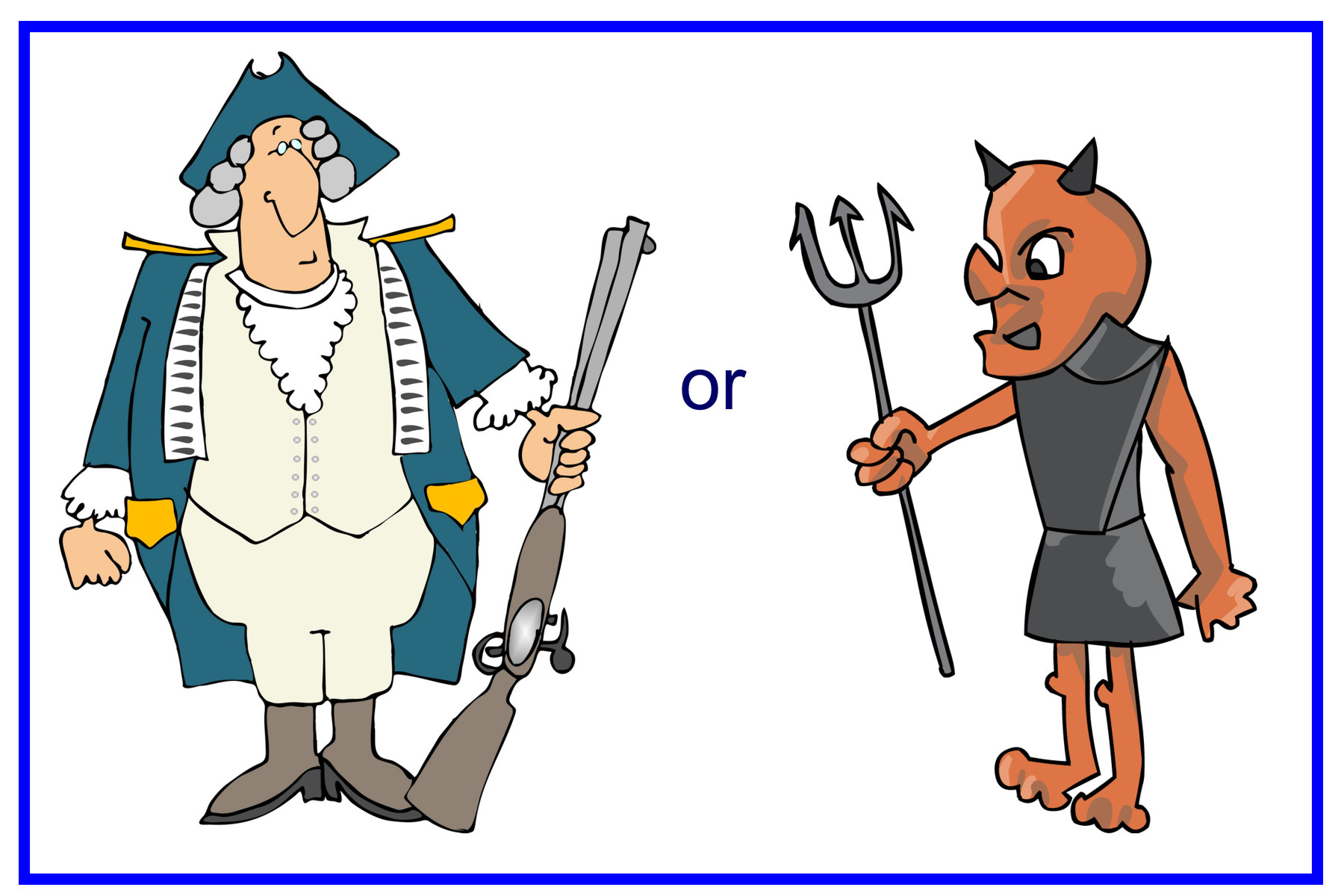
Fear is the easiest way to distract people from seeing issues clearly. It creates “something worse” and thereby allows bad to be perceived as good.

….


….

Is it a good thing when your kids start arguing with you as to whom the credit for pithy ponderings should go?

What history will teach us…

What history will teach us…

I recently saw a meme that defined treason as including giving aid to an enemy. It started me thinking about the debate over foreign aid and the role it plays in diplomacy. While I certainly agree that foreign aid must be scrupulously administered and should not be simply a default in the national budget, I disagree on the implication of who one might call our enemy*.

Interestingly, during the years between WWI and WWII the United States, while not enemies with Great Britain, saw Great Britain as being the greatest potential for threat to US security and prosperity**, second only was the rising threat of Japan. These threat assessments were based on the notion that with Germany having been weakened after WWI, a naval, and thereby commercial threat was only really viable by Great Britain and Japan.

Yet, when France fell and Great Britain became bombarded, President Roosevelt devised a scheme to aid Great Britain despite US isolationist rhetoric and congressional policy. So does that mean Roosevelt committed treason by helping a potential threat? Or does it simply mean that an unstable region, a region lacking a balance of power poses a greater threat to US security and prosperity than the potential threat of any one nation?

History teaches us that diplomacy and national policy is not as clear as political talking heads would like us to believe.  I really don’t think history will record much of the opinion of the talking heads, rather history will view the intent, implementation, and result of policy. Then history will most likely teach us we were fools to listen to the talking heads in the first place.


* enemy is defined as a hostile nation or state. The presence of hostile factions does not make the state an enemy.  Just as the US cannot universally control the ideas and actions of its citizens, the US cannot expect another nation to do that we cannot or will not do ourselves.

** National Security and Prosperity Interests was the terminology used prior to the Cold War when the language changed to National Security Interests.

Why I write…

Why do we write in blogs, journals, or memoirs? Is it because we like to see our ideas take shape, or think our messages are profound or revolutionary? Or do we simply write with the hope that they will have value today or tomorrow, have value to or for someone we will probably never meet?

A few weeks ago, a professor asked the question of why should we study history, but the real question, for me at least, is why do we write history? Why do we write our own history in our blogs, journals, and memoirs, a written record of our thoughts and actions? I think we write for three reasons. The first, we hope we are interesting and hope our activities will be of interest to others. The second, we hope that by writing our experiences down, we will learn lessons from our experiences and maybe others will learn from us as well. Third, we do not want to forget our experiences or be forgotten.

These are all valid reasons to write, but a great man taught me one other reason to write. He taught me that we can serve others through our writing, through our research, and through our records. Not just through the lessons or experiences we share, but through the lives of others we preserve through written record.

This great man, great to me at least, passed away two days ago. He had dedicated his retired years to gathering and recording history; specifically the history of his ancestors. Through his work, volumes of information became available to his relatives and to the public. He was never famous and never sought fame, but in certain circles, he was well known and well loved. Most of the histories he wrote were the histories of others, but upon his family’s request he wrote of his own youth and of his experiences as a World War Two POW. When he wrote of his journey in life, it was not to gain fame or attention, but simply to leave a record; a humble record of a man who spent his life serving. Through his life, he served his family, his faith, and his nation.

He set the bar high for those of us who follow, but in doing so he taught us the value of service and the blessings that service brings to our fellow man, to our family, and to ourselves. For in blessing others, he was truly blessed; in loving others he was loved in return.

So why do I write, simply put, to emulate in my own way a great man – I write with an attempt to serve others.

A Great-Uncle and a Great Man!

Embracing Identity Through The Written Word

To most of the world, my son seems sullen and distant, but he deeply loves mankind and mourns for their troubles. His sullen appearance is just the outward refection of his deep concerns for the sorrows of man and his passionate desire to assist the downtrodden.

To most of the world, my daughter is sweet and domestic, but she is the ferocious defender the weak. If there is a crusade to join, an injustice to correct, my daughter’s dimples and giggles are quickly replaced by a threatening growl and a merciless strike.

The world seldom sees my children’s true nature, for in their youth they still hide their identity, feeling it offers them protection.  But every so often they let down their guard and the world sees their nature. Often it is through their writings.

Teaching my children to write has been my goal, not simply for the normal communication reasons, but because writing is an outlet for them to freely express their nature. My son has learned to share ideas, life lessons, and words of compassion through writing. My daughter has learned to replace her fists with words. They are young and their skills are still in need of refining, but when their causes are just, their skills show a refinement beyond their age.

My job has not been to give them an identity, but allow them to find and embrace their own.  This week they have both proven they have learned from me, but are not restricted by me. This makes me at peace.

Are we likable?

Joseph S. Nye, Jr. has developed a definition of Soft Power versus Hard Power.  Hard power is based on coercion (military, economic, etc.). Soft Power is based on creating a system others want to emulate.  He says,

“This soft power – getting others to want the outcomes that you want – co-opts people rather than coerces them.”

and

“When a country’s culture includes universal values and its policies promote values and interests that others share, it increases the relationship of attraction…”

“Narrow values and parochial cultures are less likely to produce soft power.”

So are we going about all this wrong?  Are we, with our polarization of politics and talk of enemies, making ourselves less likable and thereby less attractive to the rest of the world?

Once we were seen as the Yanks who came to save the day.  Then we became the worlds police force, or peacekeeping force.  But something seems to have changed, and often we are disliked more than liked. In our attempt to protect ourselves from bullies, have we crossed a line and become the bully?

Just something to ponder…

………………………………………………………………………………………………….

Nye, Joseph S., Jr. Soft Power: The Means to Success in World Politics. New York: PublicAffairs Books, 2004.

We Need a Hero

I went to bed last night thinking how sad it is the way people go about fitting in with a crowd, often putting down others to do so.  Popularity is a mighty strong enticement for our youth.  We try to teach them to ‘be themselves’ and not copy the behavior of others.

As adults, do we follow the same advice?  In our attempts to gain the favor of one group, do we feel we must offend someone else?

As youth, our influence on others is often limited, either by locale or by relative anonymity, but our adult influence is often greater than we realize.

It is probably safe to say that we all slip-up time to time by putting down others in order to fit in with a crowd, but do we take the time to rectify our actions?  When we get caught, do we apologize? Do we do the very thing we ask our children to do?  Or do we feel we are justified in our speech or actions more than our children are?

During an election, much will be said that will irritate others.  Much will be said for the shear campaign value of it.  This is, and has been, part of our political culture, but is there a line we cross when we move from putting down our opponent and instead put down our opponent’s followers, the very people we want to represent?

While Mitt Romney is the latest to be called out for this, by no means is he the first to attempt gaining favor of a smaller group of citizens by insulting a larger group. Giving him the benefit of the doubt, I am going to conclude that if one of his children or grandchildren acted in a similar manner, he would require them to make amends.  This is probably the greatest reason for my sadness today.  For as a fellow Christian, especially as a fellow Mormon, and certainly as a fellow citizen, I recognize most of us make mistakes such as Romney’s, and most of us struggle to make amends.

The expectation of doing what is right should be an equal expectation placed on all of us, but sometimes I wonder if it is of greater importance for those with a greater audience to hold a higher standard of themselves than they might expect of others.  Making mistakes is part of human nature, but amending one’s mistakes is somewhat divine. It shows greater character and a greater humility.  It should not be seen as a weakness, while often it is labeled as such by detractors.  But these same detractors are the ones who would require we gain their favor by insulting and offending in the first place.

So I went to bed last night feeling sad, but this morning I woke up with a song running through my head, a song that says, “I need a hero!”  Maybe instead of counting the number of mistakes a person makes in their life, we should spend more time evaluating their reaction once they have made a mistake. For a hero is not a perfect person, but is rather a humble person willing to serve others and who attempts to make amends for their mistakes. For while they may often seem to fall short of our standards, they should never fall short of their standards without making amends.

Other YouTube versions of Holding Out For A Hero:

Shrek Version

Tribute for Peace (this one chokes me up, but it is a must see)

If anyone can find a link to the Paramount VHS promo, the romantic one not the violent one, could you please share it with me.  

Pitch-fork Wielding Assimilated Riots

Before joining a revolution, make sure you know the intent and the cause.

There is a difference between a revolution and a pitch-fork wielding, assimilated riot.  One is based on seeking a better world through freedoms and diversity of thought.  One is based on holding back freedoms and diversity; restricting thought.

Make sure your desire to protest, march and fight is based on a clear understanding of the objective, intent and goal.  That you are not simply an assimilated, crowd following, pitch-fork wielding puppet of someone else’s plan to hold back diversity out of fearful ignorance.

Agency is the freedom to choose.  It is unwise to choose assimilation over knowledge, and choice of thought. It is unwise to give your freedom up so that you may fit in with the crowd.  For you never know when the mob will turn on you, and the riot will be in your backyard.


see also: Why Do We Go to War?To Be Informed or To Be Educated,


Saith Me… Confidence in Writing

I appreciate the confidence that comes through in a work when the writer does not feel the need to overly explain his points.  He believes what he writes and writes it.  Then it is up to posterity to decide whether they find value in it.  Some may call this overconfidence or arrogance, but unless you have to defend your ideas to a dissertation board, or a classroom, or an instructor, a bit of arrogance in your beliefs may not such a bad thing. People will disagree with you, even if you well support your argument, but they will trounce you if you don’t believe in what you write.

Why Do We Go to War?

A friend of mine posed a question as to when war is justified on her Facebook wall.  The discussion that followed became focused on why those who have experienced the horror of war would ever justify the value of another war.  This is my take…

Human beings tend to enjoy being in groups.  Like with cows, the majority will stay with or nearby the herd.  Some will go rogue, wander away from the heard and chart a separate course, but most will stick to the herd.  Herd mentality dominates our social, political and economic lives.  A family unit is a herd, a political party is a herd, and school is certainly herd like.

Where human nature deviates from the cow nature is in the ability to reason.  Pecking order behavior, i.e. strong vs. weak and experienced vs. youthful, will still impact the human herd, but the human herd will reason or justify their actions and choices.

When confronted with enough data, evidence, propaganda or rhetoric, the human herd will justify a course of action.  They will justify a course of action in order to remain in the herd.  If they remain unconvinced that the course is justified, they may seek to separate from the herd, but will look for another herd to join.  The theory that there is safety in a crowd certainly applies to ideological fears of danger as well as physical fears of danger.

War is simply one of many courses mankind justifies. In contrast to peace, war is much easier to propagandize.  Fiery speeches, enflamed rhetoric, and poignant sound bites are easy to develop when fear and danger is in the mix.  The key to a successful herd is in maintaining a feeling of security in the group.  Threaten the group and it will rally together in defense.

So why do people who have experienced war agree to additional war?  Simply put, even the horrors of war cannot negate the justification of protecting the herd.  Although there are some who will develop such a strong sense of revulsion to conflict that they will suppress any feelings of self-preservation in order to avoid further conflict, they are rare and seldom include mothers.

A final point, no two people ever experience war with the same perception.  Even those participating in the same horror, experience the horror differently. This makes me think, strangely, of childbirth.  Why would anyone who nearly died in the delivery room ever seek another pregnancy?  The justifications of the blessings override the worry of fear, pain, and possibly death.  In the case of war, if the end result can be portrayed as being of greater value than the known casualties associated with war, then the herd can be persuaded to follow a course of war.