Cold War Syndrome & Cold War Hero Syndrome

Is it possible that the Baby Boomer generation all suffer from a type of Post-Traumatic Stress Disorder? That their youth filled with bomb shelters and threats of communist infiltration has left them traumatized. Do they suffer from Cold War Syndrome – the fear that we are in grave peril whenever we do not have an enemy inciting strong militaristic talk from our own leaders.
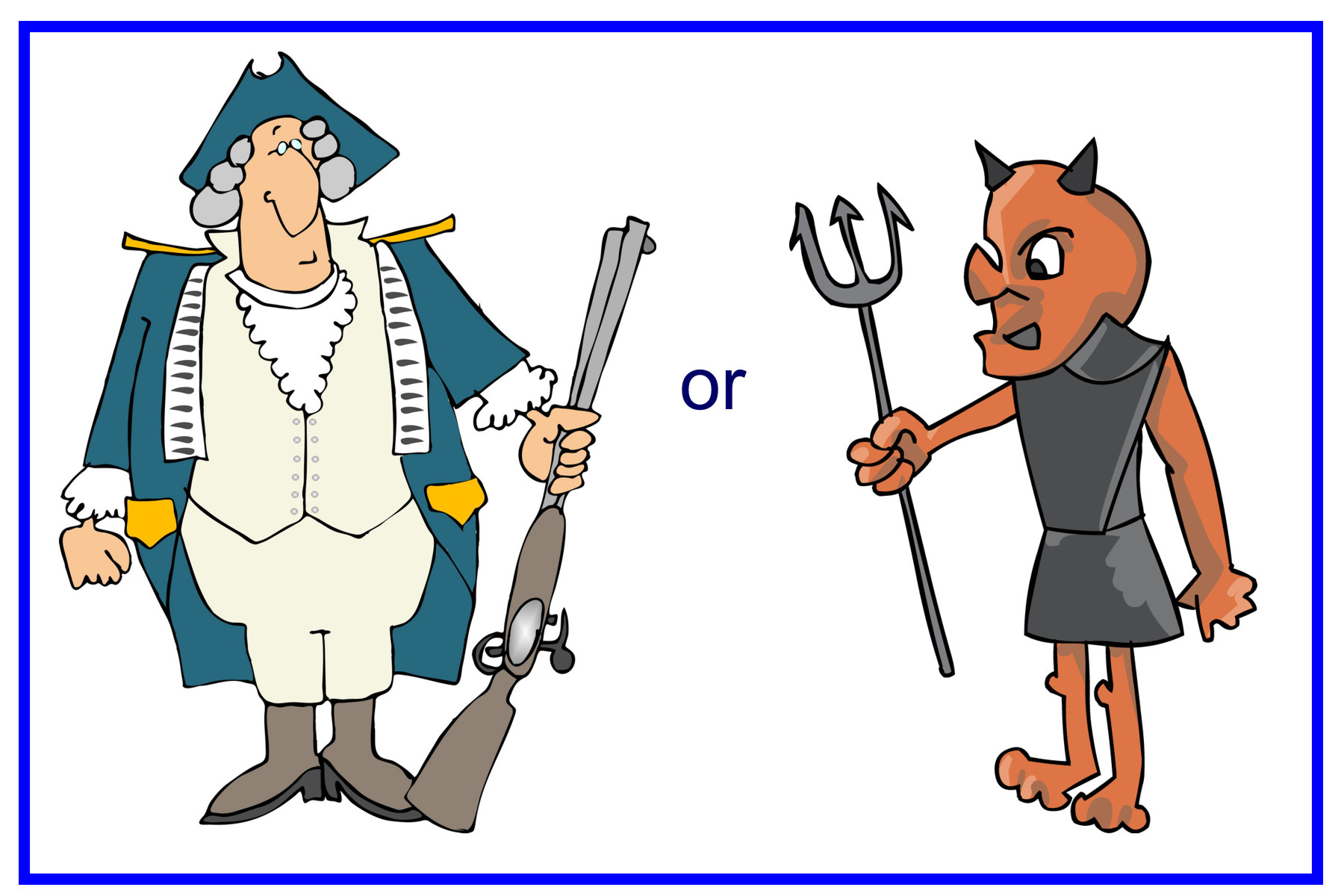
This syndrome includes the strong desire to stockpile weapons, have a National Offense Policy rather than a National Defense Policy, and the belief that anyone who disagrees with us is ideologically evil. Symptoms include, bullying our friends and threatening any who votes against our National Interests. Happiness and a sense of security is only achieved when the world tells us we are the best, most beloved, and bows at our feet.

The 80’s generation is often exempt from this syndrome because of the mentality that war equals total destruction, and our own leaders are just as dangerous as those of our enemy. However, there are a few who were overly influenced by movies like Red Dawn and have subsequently developed an off shoot of the syndrome called Cold War Hero Syndrome.  This syndrome is similar to its parent syndrome, but deviates by placing a stronger belief on the idea that huge, home-based stockpiles of weapons will save the day.

It is highly possible that there is a genetic factor in the developing of Cold War Syndrome and Cold War Hero Syndrome. Evidence, while not conclusive, indicates that the syndrome is more prevalent in family units and therefore maybe passed from one generation to the next.

Fortunately these syndromes do have a cure.  Education, Community Service, Cultural Diversity, International Travel, and Loving Thy Neighbor as Thyself all reduce, if not eliminate, the fear that perpetuates these syndromes.  Humility and a desire to work with rather than dominate others, also helps.

Is the Cold War Really Over?

I remember how excited everyone was when the Cold War ended. Today, I researched about how hard it has been to leave the policies of the Cold War behind for a certain group of politicians. Bush was a big one to use Cold War rhetoric and policies. His advisers were entrenched in the Cold War. They saw phantoms at every turn, but missed the phantoms with a strategy.

Tonight I heard more of that same Cold War rhetoric, even directed at an old enemy, simply because I wasn’t smart enough to turn off the tv. The enemies have changed slightly but it seems we still need to have an enemy to feel good about ourselves. Still think we must define our power and our strength by the suppression of others.

Ironic how we don’t want to be the world’s police force, but at the same time we want to tell the world what they can and cannot do. All in the name of our national interests.

Today, I read an interesting article about how we have been at war since 1776. Do we know how to get along? Do we know how to be free without constant war? Must we play the international bully to feel good about who we are? Must we fear the world in order to feel protected? Does national defense always have to include international conflict? Is there no other way to lead, participate, or show strength?

What is wrong with being part of an international community? What is wrong with working together?  Yes, there will be war, will be bad people committing atrocious acts against humanity, but must we become so afraid that we justify Machiavellian preemptive strikes? Justify being the international bully?  How did we get this way, and how do we get off this path?

Will the Cold War ever be over if we continue to live in a perpetual state of fear and distrust?  Because the Cold War was not man against man, or even nation against nation – it was ideology against ideology, and we still can’t seem to understand that not everyone has to be like us in order to be a good neighbor. We can disagree and still work together dealing with real threats and not perceived ones.

The days of bolstering our economy through military buildup are over. New solutions must be found, and they won’t be found chasing phantoms. Whenever we chase phantoms, we lose. Phantoms will use our fears against us, and there is no weapon that will stop them.  Like the natural disaster, phantoms and their evil can reach us through even the best protections. Waging a Cold War of containment or annihilation will not stop the phantoms, but will cause us to run ourselves into the ground.

Pitch-fork Wielding Assimilated Riots

Before joining a revolution, make sure you know the intent and the cause.

There is a difference between a revolution and a pitch-fork wielding, assimilated riot.  One is based on seeking a better world through freedoms and diversity of thought.  One is based on holding back freedoms and diversity; restricting thought.

Make sure your desire to protest, march and fight is based on a clear understanding of the objective, intent and goal.  That you are not simply an assimilated, crowd following, pitch-fork wielding puppet of someone else’s plan to hold back diversity out of fearful ignorance.

Agency is the freedom to choose.  It is unwise to choose assimilation over knowledge, and choice of thought. It is unwise to give your freedom up so that you may fit in with the crowd.  For you never know when the mob will turn on you, and the riot will be in your backyard.


see also: Why Do We Go to War?To Be Informed or To Be Educated,


Saith Me… Understanding Your Opponent

Understanding your opponent is vital, misunderstanding your opponent is detrimental to success. Information inaccurately sourced or evaluated can lead to great struggle and strife; can lead to confusion and defeat. Avoid quick assessment or popular belief, dig deeper and be prepared to admire your opponent even as you prepare to defeat them.


Frustration Boils Over

Living in a world where good news is hard to find can lead to a feeling of frustration. At some level, most rational humans recognize that tough times are part of life.  In our personal lives we overcome our frustration by looking for the positive amongst the negative, you know the rose in spite of the thorns.  We smile at puddle jumping kids, fuzzy kittens and babies. We take heart that our frustrations are temporary, knowing fully well that the negative will make the positive seem all the sweeter when it comes.

War, recession and disease can adversely affect the levels of individual frustration spurring the growth of collective frustration.  Collective frustration can then lead to action.  The American Revolution is a case of collective frustration turned to action.  Where collective frustration differs slightly from individual frustration is in the constant build up due to media coverage.

In a household, it does not benefit the members to harp on what cannot be changed or changed quickly.  A wise family soon learns to downplay the negative and highlight the positive.  Sadly this wisdom is not present in the collective populous, at least not today. While many would like to blame the media for the escalating the levels of public frustration, the truth is they are a creature that must be fed by others.  Corporations, lobbyists and yes, politicians feed the media beast.  In some cases the media is fat on the information being fed to them by those with an agenda, and in other cases they have become scavengers searching for tasty morsels dropped unintentionally by those in the limelight.  The public becomes the hungry chicks awaiting the food and keeping the demand high.  Regardless of how the media obtains their food, their information is the result of the attitudes and desires of those seeking fame, fortune or power.

With each negative story, the collective frustration grows.  Soon with pitchforks in hand, a mob forms looking to take action.  In 2008, frustration due to war and recession led many to vote for a change, but opposition to the voice of change was great.  Whether due to political affiliation, ideology, or chance of birth, rather than being a symbol of hope, the president became a symbol of division.  Even within his own party, unity was not achieved and hope diminished.  This led to a rally of frustration in 2010. Sadly, hope was not the objective of this rally, and more frustration was the result.

Now as we approach a new presidential election, frustration is boiling over as can be seen in the Chick-fil-a controversy.  Boycotting or supporting Chick-fil-a allows the frustrated populous a way to expend their frustration, and as long as the pitchforks are left at home, no lasting harm will be done.  Some will argue this point saying there will be an economic impact on the franchise, but it is just as likely to be a positive one as to be a negative one. When the rallies are over, maybe those mobilizing to protest or support Chick-fil-a will feel better, feel a sense of action and accomplishment when the day is done.  Hopefully this will allow them to feel they have been part of a positive movement. Maybe they will again be able to find the beautiful rose and not just the painful thorns. The pot of public frustration might then return to a simmer rather than a boil.

A Gun Owner on the Subject of Guns

It is said all the time here in the US that “guns don’t kill people, people kill people.”  In light of the latest horrible episode depicting the horror wrought by one human on another, the saying should be changed.

“Guns may not kill people, but people carrying guns kill people.”
More people carrying guns will only lead to more dead, not less.  

People legally carrying guns into schools, parks, and theaters will not deter the senseless, horrific killings of innocents.  By all means, if you chose to own guns, do so, but do so at home, or on the gun range. Do so after receiving training. Do so with the knowledge that only nutcases talk about killing others.  Spouting off that you are prepared to kill another, even in self-defense, does not make you sound brave. It makes you sound foolish.

Many men and women train to protect the nation and its citizens with deadly force if needed, but I doubt they brag about the actual idea of killing another human being.  It is one thing to own a gun in honor of your Freedom to do so, it is completely different to own a gun with the intent to kill someone.  If you doubt this, ask a cop or a soldier.

My thoughts and prayers go out to all those who have lost their lives or their loved ones this week.  My heart aches for your sorrow.

Saith the Daughter … War

Women tend to make advancements in equality after every war, probably due to the decrease in the male population.  So therefore, war must be an evil female plot to get ahead. – A Theory to Ponder in the Future, saith the daughter.

Why Do We Go to War?

A friend of mine posed a question as to when war is justified on her Facebook wall.  The discussion that followed became focused on why those who have experienced the horror of war would ever justify the value of another war.  This is my take…

Human beings tend to enjoy being in groups.  Like with cows, the majority will stay with or nearby the herd.  Some will go rogue, wander away from the heard and chart a separate course, but most will stick to the herd.  Herd mentality dominates our social, political and economic lives.  A family unit is a herd, a political party is a herd, and school is certainly herd like.

Where human nature deviates from the cow nature is in the ability to reason.  Pecking order behavior, i.e. strong vs. weak and experienced vs. youthful, will still impact the human herd, but the human herd will reason or justify their actions and choices.

When confronted with enough data, evidence, propaganda or rhetoric, the human herd will justify a course of action.  They will justify a course of action in order to remain in the herd.  If they remain unconvinced that the course is justified, they may seek to separate from the herd, but will look for another herd to join.  The theory that there is safety in a crowd certainly applies to ideological fears of danger as well as physical fears of danger.

War is simply one of many courses mankind justifies. In contrast to peace, war is much easier to propagandize.  Fiery speeches, enflamed rhetoric, and poignant sound bites are easy to develop when fear and danger is in the mix.  The key to a successful herd is in maintaining a feeling of security in the group.  Threaten the group and it will rally together in defense.

So why do people who have experienced war agree to additional war?  Simply put, even the horrors of war cannot negate the justification of protecting the herd.  Although there are some who will develop such a strong sense of revulsion to conflict that they will suppress any feelings of self-preservation in order to avoid further conflict, they are rare and seldom include mothers.

A final point, no two people ever experience war with the same perception.  Even those participating in the same horror, experience the horror differently. This makes me think, strangely, of childbirth.  Why would anyone who nearly died in the delivery room ever seek another pregnancy?  The justifications of the blessings override the worry of fear, pain, and possibly death.  In the case of war, if the end result can be portrayed as being of greater value than the known casualties associated with war, then the herd can be persuaded to follow a course of war.

To Be Informed or To Be Educated

The citizens of the United States are distracted by political campaign information. They are embroiled in heated debate over healthcare. They argue about getting rid of the immigrants who long to support our economic and social system when they should be concentrating focus on the dangerous criminals who are the real threat. Therefore, they are missing the warning signs of other problems on the horizon.  One such international problem can be found just across the southern border as Mexicans go to their polls.

It is doubtful the President or the experienced members of congress are distracted from the international problems. Looking outside of the US, one sees that the US is not the only nation struggling with a poor economy, immigration issues, international crime and terrorism. What kind of a future does the US face, if a majority the ‘experienced’ leaders in DC are replaced by a whole new crew of 1st timers? Especially if the only agenda they bring with them is on the US economy, and on the US healthcare, and on the US borders.

The origins of US immigration policies are found in the early 1900’s during the time when isolationism was still being valued as good US policy. Isolationist policies, however, did not prove effective in the early 1900’s, they simply made the US late-comers for two wars for which joining was unavoidable.  In 1942 the internment policy of rounding up anyone “suspicious” was beyond contemptible, but it was policy.  Fear and a tremendous feeling of suffering dictated US domestic and foreign policies in the first half of the 20th century.

However at the same time the US was closing its borders, there was a social push to help its poor and downtrodden citizens.  Labor laws, workers unions, Social Security and legislation similar to the National School Lunch Act, all played a role in post war successes.  Due to economic policies during WWII, employer based health insurance became widely offered as well.   It was determined that prosperity was much easier to achieve if the nation was healthy rather than unhealthy. There was a need for the government to act, and the power of big government began to replace the power of big business.

Now a hundred years later, immigration and health care issues are at the center of US politics again.  Citizens are beginning to fear “others” and focusing on national issues while avoiding international issues.

Progress has been made but fear, misinformation, and “money” backed political theater will not keep the progress moving forward.  Talk of the “good ol’ days” is just talk.  If you are blessed to know survivors of those days, ask them about epidemics, outhouses, food shortages and social inequality.  It is a human trait to reminisce of the ol’ days. Selective memory is common, some prefer focusing on the good and some on the bad.  The citizens of the United States need to evaluate the good and the bad, the effective and the ineffective.

It is sad that with easy access to so much information, so many are misinformed.  A random comment posted concerning an editorial on the Supreme Court Healthcare ruling claimed, “We are becoming like the USSR.”  Many would like to blame this misinformed opinion on a failing educational system, but that would be unfair.  That would be like saying Fox News, or CNN, or MSNBC are to blame for all the ignorance in society. To quote a common saying, “guns don’t kill people, people kill people”, on that same reasoning, “cable news doesn’t make ignorance, people choose ignorance”.

Ignorance is conquered when an individual seeks information, evaluates the information by comparing it to other information, and then forms an opinion. This is how an individual becomes educated.  This how parents should be teaching their children. This is what voters should be doing before casting a vote.  This is what politicians should encourage.

While some journalists still prescribe to providing information rather than opinion, it is not up to them to educate us.  It is up to the individual to become educated and not simply informed.