Is the Cold War Really Over?

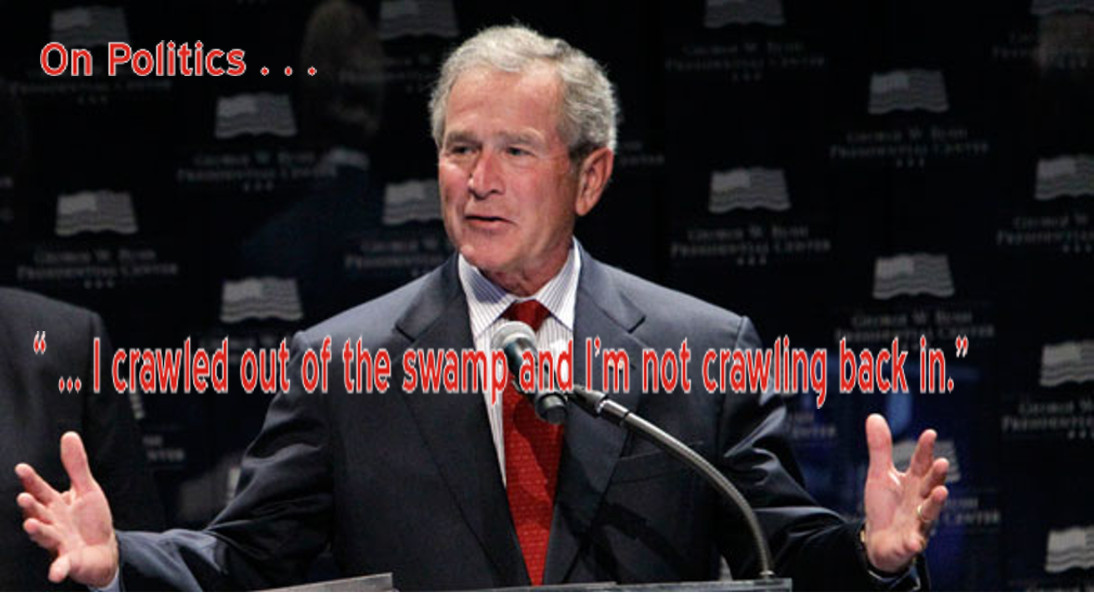
I remember how excited everyone was when the Cold War ended. Today, I researched about how hard it has been to leave the policies of the Cold War behind for a certain group of politicians. Bush was a big one to use Cold War rhetoric and policies. His advisers were entrenched in the Cold War. They saw phantoms at every turn, but missed the phantoms with a strategy.

Tonight I heard more of that same Cold War rhetoric, even directed at an old enemy, simply because I wasn’t smart enough to turn off the tv. The enemies have changed slightly but it seems we still need to have an enemy to feel good about ourselves. Still think we must define our power and our strength by the suppression of others.

Ironic how we don’t want to be the world’s police force, but at the same time we want to tell the world what they can and cannot do. All in the name of our national interests.

Today, I read an interesting article about how we have been at war since 1776. Do we know how to get along? Do we know how to be free without constant war? Must we play the international bully to feel good about who we are? Must we fear the world in order to feel protected? Does national defense always have to include international conflict? Is there no other way to lead, participate, or show strength?

What is wrong with being part of an international community? What is wrong with working together?  Yes, there will be war, will be bad people committing atrocious acts against humanity, but must we become so afraid that we justify Machiavellian preemptive strikes? Justify being the international bully?  How did we get this way, and how do we get off this path?

Will the Cold War ever be over if we continue to live in a perpetual state of fear and distrust?  Because the Cold War was not man against man, or even nation against nation – it was ideology against ideology, and we still can’t seem to understand that not everyone has to be like us in order to be a good neighbor. We can disagree and still work together dealing with real threats and not perceived ones.

The days of bolstering our economy through military buildup are over. New solutions must be found, and they won’t be found chasing phantoms. Whenever we chase phantoms, we lose. Phantoms will use our fears against us, and there is no weapon that will stop them.  Like the natural disaster, phantoms and their evil can reach us through even the best protections. Waging a Cold War of containment or annihilation will not stop the phantoms, but will cause us to run ourselves into the ground.
Pitch-fork Wielding Assimilated Riots

Before joining a revolution, make sure you know the intent and the cause.

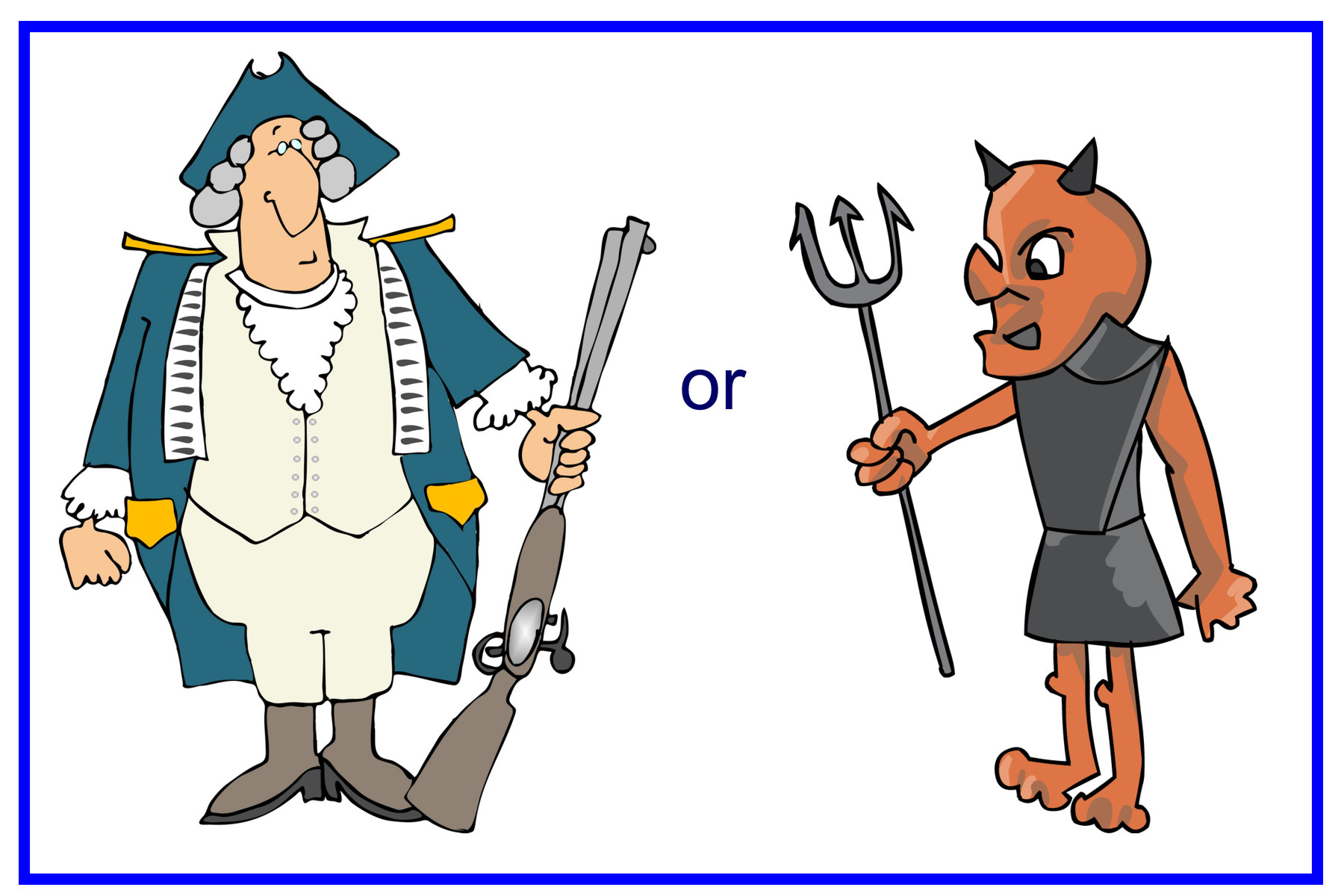
There is a difference between a revolution and a pitch-fork wielding, assimilated riot.  One is based on seeking a better world through freedoms and diversity of thought.  One is based on holding back freedoms and diversity; restricting thought.

Make sure your desire to protest, march and fight is based on a clear understanding of the objective, intent and goal.  That you are not simply an assimilated, crowd following, pitch-fork wielding puppet of someone else’s plan to hold back diversity out of fearful ignorance.

Agency is the freedom to choose.  It is unwise to choose assimilation over knowledge, and choice of thought. It is unwise to give your freedom up so that you may fit in with the crowd.  For you never know when the mob will turn on you, and the riot will be in your backyard.


see also: Why Do We Go to War?To Be Informed or To Be Educated,


Polling Questions

Is refusing to answer a poll question equated to the intent to abstain from voting, or is it seen as simply not believing anyone has a right to know how you vote?

How accurate are phone call polls when many people simply hang up? If only those entrenched in their party take the time to answer, are we actually polling the entire voting populace?

The undecided may not be the only ones not answering the questions.

Saith Me… Confidence in Writing

I appreciate the confidence that comes through in a work when the writer does not feel the need to overly explain his points.  He believes what he writes and writes it.  Then it is up to posterity to decide whether they find value in it.  Some may call this overconfidence or arrogance, but unless you have to defend your ideas to a dissertation board, or a classroom, or an instructor, a bit of arrogance in your beliefs may not such a bad thing. People will disagree with you, even if you well support your argument, but they will trounce you if you don’t believe in what you write.

Saith Me… Understanding Your Opponent

Understanding your opponent is vital, misunderstanding your opponent is detrimental to success. Information inaccurately sourced or evaluated can lead to great struggle and strife; can lead to confusion and defeat. Avoid quick assessment or popular belief, dig deeper and be prepared to admire your opponent even as you prepare to defeat them.


Frustration Boils Over

Living in a world where good news is hard to find can lead to a feeling of frustration. At some level, most rational humans recognize that tough times are part of life.  In our personal lives we overcome our frustration by looking for the positive amongst the negative, you know the rose in spite of the thorns.  We smile at puddle jumping kids, fuzzy kittens and babies. We take heart that our frustrations are temporary, knowing fully well that the negative will make the positive seem all the sweeter when it comes.

War, recession and disease can adversely affect the levels of individual frustration spurring the growth of collective frustration.  Collective frustration can then lead to action.  The American Revolution is a case of collective frustration turned to action.  Where collective frustration differs slightly from individual frustration is in the constant build up due to media coverage.

In a household, it does not benefit the members to harp on what cannot be changed or changed quickly.  A wise family soon learns to downplay the negative and highlight the positive.  Sadly this wisdom is not present in the collective populous, at least not today. While many would like to blame the media for the escalating the levels of public frustration, the truth is they are a creature that must be fed by others.  Corporations, lobbyists and yes, politicians feed the media beast.  In some cases the media is fat on the information being fed to them by those with an agenda, and in other cases they have become scavengers searching for tasty morsels dropped unintentionally by those in the limelight.  The public becomes the hungry chicks awaiting the food and keeping the demand high.  Regardless of how the media obtains their food, their information is the result of the attitudes and desires of those seeking fame, fortune or power.

With each negative story, the collective frustration grows.  Soon with pitchforks in hand, a mob forms looking to take action.  In 2008, frustration due to war and recession led many to vote for a change, but opposition to the voice of change was great.  Whether due to political affiliation, ideology, or chance of birth, rather than being a symbol of hope, the president became a symbol of division.  Even within his own party, unity was not achieved and hope diminished.  This led to a rally of frustration in 2010. Sadly, hope was not the objective of this rally, and more frustration was the result.

Now as we approach a new presidential election, frustration is boiling over as can be seen in the Chick-fil-a controversy.  Boycotting or supporting Chick-fil-a allows the frustrated populous a way to expend their frustration, and as long as the pitchforks are left at home, no lasting harm will be done.  Some will argue this point saying there will be an economic impact on the franchise, but it is just as likely to be a positive one as to be a negative one. When the rallies are over, maybe those mobilizing to protest or support Chick-fil-a will feel better, feel a sense of action and accomplishment when the day is done.  Hopefully this will allow them to feel they have been part of a positive movement. Maybe they will again be able to find the beautiful rose and not just the painful thorns. The pot of public frustration might then return to a simmer rather than a boil.

Who is the Boogieman?

While many may feel big government is the boogieman threatening to take away our freedoms, I worry that big business is the greater threat. Their money makes for a loud voice, and when they decide to buy speech, little seems to stop them.  Unlike a government which is bound by borders, they are international citizens purchasing and often dictating policies throughout the world.  They speak to an international crowd.  Their voices drown out reason.  Their products seduce us in to acceptance or denial.  They become our masters.

Okay, I really don’t think capitalistic doom awaits us around the corner, but it cannot be denied how corporate influence is at the heart of many of the economic ills plaguing us today.  It makes me wonder, how many of the attacks on the US government, or other national governments, are being paid for by corporations who love deflecting attention from their own role in our economic woes?

Accountability should be shared, but in a world where speech can be purchased by the highest bidder, it is far easier to buy out the market, to sell a pretty package, or promise a miraculous future rather than to acknowledge responsibility for risky mistakes and ventures.

While governments must try to care for their people, corporations are not bound by the same constraints.  It is easy to find examples of harmful or wasteful products being sold to the masses.  The boogieman is artful in his disguise and sells an enticing product, but beneath all the glamour, sparkle, and loud noise, the big business is focused only on one thing – profit.  People become expendable resources on a spreadsheet of greed.

These ponderings I share have been meandering through my brain for a while, but an article concerning Olympic marketing brought them to the forefront today. While much attention is directed at “draconian” governmental control, the underlying boogieman is the corporate sponsors who do not want even grandma to stitch the Olympic rings on a sweater, or junior to wear a competitor’s t-shirt.

Maybe this is why corporations are considered people by so many wealthy leaders.  If the corporations are not people, then governments no longer can say they serve the people.

So who is the boogieman, and who is stirring up the pitchfork wielding crowd? I will let you decide, for now I must return to playing with my techie toys, and eating my yummy junk food all while I get ready to watch the Olympics this weekend.

Saith the Daughter … War

Women tend to make advancements in equality after every war, probably due to the decrease in the male population.  So therefore, war must be an evil female plot to get ahead. – A Theory to Ponder in the Future, saith the daughter.