Intervention versus Peacekeeping

What was I thinking when I doubled up on these two history classes?

Intervention or peacekeeping.

One is good and one is bad. One is wrong and one is right. One should work and one should not.

But there is no consensus as to which is which. Are they not just the same thing with different names?

In the end, are they not simply outside entities imposing a course of action on a weaker, more chaotic entity or region?

Isn’t it all just about the spin which is placed on the action?

Speaking of spin, this makes my head spin and I need a nap.

News of Declassifications through FOIA

The real news is not simply that stuff gets declassified. The real news is that every day scholars seek more declassification of information through the Freedom of Information Act (FOIA) without seeking fame. It is from their efforts that we have a chance to broaden our understanding and not simply our talking points.

Who Will Survive Unscathed?

I just love it when a journalist tells it like it is… (see the link)

My favorite section was on the IRS and the difficult job they have.  Like any other government branch, the IRS is made up of humans and humans often make bad decisions, especially when there are new or complicated policies to manage.

What I find most odd about this latest round of “scandal” is the comparisons being made between President Obama and President Nixon. Nixon was a tightfisted president when it came to decision making and oversight. He trusted few.  Obama seems to trust many and seeks to let the professionals in each bureau run the day-to-day.  This is what causes him so many problems – he trusts people to do their jobs.

Mistakes happen in every administration, that is a given. There has never been nor will there ever be a “perfect” president, not even ole George Washington himself was without flaws. Sometimes mistakes get reported, sometimes they don’t, and in some cases mistakes are covered up – hopefully in all cases mistakes are motivators for change and better training.

Mistakes will happen but if WE THE PEOPLE keep going on witch hunts and continue on a path of losing faith every time someone makes a mistake – including the people in the Oval Office and in Congress – then WE THE PEOPLE will be making the biggest mistake of all. Our lack of faith in our system is the greatest threat to our nation! When bad things happen, when mistakes are made, and when threats are not halted at our borders, instead of rallying we gnash our teeth and rend our clothes in anger over our governments failure. But our government is of the people and by the people. People make mistakes  – some from good intentions and other from arrogance, but this is nothing new.  The only thing new is the speed and volume of information availability. Mistakes now become public fodder even before they are fully investigated. Human mistakes!

Just as the laws are made to protect the common man, those same laws protect the common man who works for the government whether they be elected, appointed, or hired by a bureaucratic supervisor. During a witch hunt, would you voluntarily give up your right to remain silent? So why then would you expect any public servant or employee to give up that same right? Instant news and the public outcry that follows instant news do not negate the right to a fair hearing.

Seeking change, disagreeing with policy, disliking personalities – these things may direct your voting choice but they should not cause you to distrust those who are elected, nor should they cause you to lose faith in the system. During the election cycle there is much complaint about mudslinging and the lack of truth, but where is the outrage and disgust over such underhanded politically motivated tactics during the non-election cycle (if there is such a period anymore)? Hiding political agendas and mudslinging behind demands for transparency and demands for instant details is appalling. Even when mistakes are less mistake and more intended actions, the rights of individuals and the protection of innocents must be considered. Even a witch hunt targeted at one, may cause unintended casualties and unintended consequences. People make up our government and their lives and their freedoms COUNT!

In the days of old, the witch hunt often targeted innocents, and just as often ended up targeting the very people responsible for the witch hunt’s origin. When January 2017 rolls around, who will have survived this latest witch hunt unscathed? Will it be WE THE PEOPLE or will WE perish due to our own mistakes rather than from those we perceive made by others?


Questions… Taking Sides and Losing Unity

Is there a danger in supporting YOUR TEAM rather than supporting OUR Team? Have we lost the OUR NATION and become irrevocably divided in a contest of finding fault? Has history become only the Myths and Legends with which we batter and attack the opponent? Or can history still teach us something about the reality of human fallibility and the imperfect nature of trying to do our best and falling short of expectations? Can truth ever be found if we only see what we want to see, only hear what we want to hear, and only perceive what we already perceive?

Are we still trying to learn, grow, evaluate, and improve – or are we simply taking sides?

.

.

.
“Note to Democrats and Republicans: This Is Not a Game” by Mathew Dowd

Critical Thinking and Pleasant Articulation

In the attached article, a recently retired high school teacher explains the troubling trend in education because of the high focus on standardized tests. While he attributes the problems to the federal policies of the last decade, the focus on standardized tests is not new and the side effects were present even 20 years ago, just not a prevalent. In the 1991-2 school year, I tutored a college freshman who was failing her International Relations class. The problem, as it turned out, was that she had never taken essay style tests and had never been responsible for taking notes in class in preparation for an essay style test. Yet she had graduated with honors from one of the best high schools in the nation.

The concerning issue highlighted in this article is the notion of “bad writing” as a scheme to excel on rubric graded writing. I am seeing the results of this type of thinking in my husband’s undergraduate classes and my graduate classes (online education affords us the opportunity to evaluate the other student’s ability to write). I have even had one graduate level professor criticize my work (with rubric attached) highlighting the dysfunction of the system.  While I do not claim to be a literary genius, it is very disconcerting when a young professor is more concerned with checking boxes than with evaluating form and function. While more experienced professors seek a well-supported thesis, the younger ones are concerned more with whether every point of a lecture is covered, almost in bullet regurgitation in order to stay within a prescribed word count.

But this is not a completely new problem, just one more common as all facets of education require ease of grading.

Not all disciplines follow the same writing style and the variations can be troublesome for students who have not learned flexibility in writing. Many years ago a great conversation with a fellow student highlighted this point. She had received a poor grade on her paper and had been told to see mine for a comparison. She was appalled to find out that I had not followed the same essay format she had learned in high school English class. I explained that the standard essay she had learned under the strict tutelage of her high school instructor was not what our International Relations professor wanted us to write. He wanted us to write a critical essay highlighting what we THINK!  What a notion – someone not only asking us to think but asking us to write it down. Students need to practice multiple styles of writing in order to gain the comfort of flexibility.

Thinking and standardized tests can sometimes cause problems for students, as I have witnessed with one of my two teens. My son, a person who sometimes thinks too much, receives decent scores on standardized tests, but not the stellar scores his younger sister receives. The instructor in the Washington Post article mentioned some of his students had taken Algebra in eighth grade. My son was taking physics when he began taking his ACTs and had a real struggle with the math section. It had been too long since he had seen simple math problems. Once he pulled out his old books and spent some time reviewing the simple, his math scores came up to snuff.

My daughter’s experience with the testing is slightly different because she likes to avoid analyzing but loves data. She is my ultra-creative child who has a near perfect memory.

My goal has been to teach my children to think, analyze, and then think some more. This had not been an easy task. My dedication to this task has left my children less prepared for the standardized tests they are required to take in order to get into the schools of their choice, but it was a risk worth taking. In the long run test scores will do little for them, but critical thinking and pleasant articulation will serve them for a life time.

http://www.washingtonpost.com/blogs/answer-sheet/wp/2013/02/09/a-warning-to-college-profs-from-a-high-school-teacher/

Genuine Greetings of the Season

Ornament 01

Whenever the media or friends discuss the war on Christmas these thoughts come to mind…….

I often wonder if “political correctness” is blamed for the decline in “Christmas” because Christians avoid looking at themselves and asking if they are teaching “Christmas” or teaching something else. It is easy to get fired up at the “attacks” but much harder to recognize that “Christmas” doesn’t just happen because you buy a tree and make cookies.

I really don’t think the lack of a nativity at the court house or public building will adversely affect my family, but the lack of one in my home certainly will. While it is sad to see public display of the holiday diminish, I do try to keep in mind that it is the traditions we make at home and share with our family and friends that count. I also remind myself that Hollywood’s version of Christmas is a rather new version and that the fundamentals of Christmas count more than how Hollywood defined Christmas to our parents and grandparents.

Whether I say Merry Christmas, Happy Holidays, or Season’s Greetings, I am wishing a person the best. Christ is only removed from Christmas when I forget to include him in my life, not when others exclude him from theirs. I would hope I live in such a way that people will still know I am Christian even when I wish them Happy Holidays. If nothing else, I hope they at least see the kindness in me when I wish them happiness.

A wish of cheer, in any form, is the message that carries on even after the lights and the tinsel get packed away for another year. Christ will never be removed from Christmas as long as well-wishers genuinely wish each other glad tidings at least once a year. This is part of the magic of the season; this genuine wish for blessings and cheer to be the companion of others. The Bleak Midwinter is replaced by a White Christmas the moment when a genuine greeting brightens someone’s day.

Listen, Learn, and then Act

The compassionate being desires to assist, to ease another’s burden. While a compassionate nature may be natural for many, the compassionate course of action can still seem fraught with uncertainty.

Observation of another’s behavior or need is not enough. The compassionate being must look beyond the symptoms and try to discern the cause of the symptoms. Only when the cause is understood can one truly act in a manner that is both compassionate and helpful.

An example I like to share deals with fibromyalgia. Years ago after an auto accident derailed me from my regular exercise routine, I was determined to get back on track, but unfortunately every time I tried to return to a routine which included exercise I would get sick. All of my symptoms indicated I had the stomach flu. I was nauseated, had chills, and ached all over. Compounding these symptoms was the feeling that I had over-done my efforts, often due to muscle soreness similar to overuse. For nearly ten years I struggled with these symptoms. Diagnosis was a tremendous relief and required a big change. I had to rethink much of what I knew about pain. With fibromyalgia one must move through the pain, taking time off as with exercise injury pain was not the solution. The very treatment I was implementing before diagnosis was, in reality, making my situation worse.

Many of the symptoms we see exhibited by other struggling or suffering through life can be easily observed but also be easily misdiagnosed. If we truly wish to compassionately help others, we must take the time to understand rather than simply observe. Without the investment of time, we may, in our compassionate desire to help, actually hinder the person we wish to help. “It is the thought that counts,” may be true with holiday gift giving, but it is not necessarily true when we try to show compassion. Well-meaning comments, suggestions, and acts can truly make a struggle worse.

When compassion surfaces, take the time to listen and learn; ask in what way you can act. If time is a commodity of which you have little, consider charitable contributions to organizations dedicated to serving people in need. It is better than well-meaning acts of compassion which are misplaced because of misdiagnosis. The last thing you would wish to do in your effort to show compassion is to cause harm because you are interpreting the symptoms incorrectly. When the desire to show your compassion is strong but your time is limited, help those who are dedicated to helping. While nothing can replace the investment in friendship and time, economic contribution is certainly better than shuffling compassion aside.

What history will teach us…

What history will teach us…

I recently saw a meme that defined treason as including giving aid to an enemy. It started me thinking about the debate over foreign aid and the role it plays in diplomacy. While I certainly agree that foreign aid must be scrupulously administered and should not be simply a default in the national budget, I disagree on the implication of who one might call our enemy*.

Interestingly, during the years between WWI and WWII the United States, while not enemies with Great Britain, saw Great Britain as being the greatest potential for threat to US security and prosperity**, second only was the rising threat of Japan. These threat assessments were based on the notion that with Germany having been weakened after WWI, a naval, and thereby commercial threat was only really viable by Great Britain and Japan.

Yet, when France fell and Great Britain became bombarded, President Roosevelt devised a scheme to aid Great Britain despite US isolationist rhetoric and congressional policy. So does that mean Roosevelt committed treason by helping a potential threat? Or does it simply mean that an unstable region, a region lacking a balance of power poses a greater threat to US security and prosperity than the potential threat of any one nation?

History teaches us that diplomacy and national policy is not as clear as political talking heads would like us to believe.  I really don’t think history will record much of the opinion of the talking heads, rather history will view the intent, implementation, and result of policy. Then history will most likely teach us we were fools to listen to the talking heads in the first place.


* enemy is defined as a hostile nation or state. The presence of hostile factions does not make the state an enemy.  Just as the US cannot universally control the ideas and actions of its citizens, the US cannot expect another nation to do that we cannot or will not do ourselves.

** National Security and Prosperity Interests was the terminology used prior to the Cold War when the language changed to National Security Interests.

Saith Me… The Hardened Heart

When the hearts of the many are hardened and are accepting of hate, it is then there will be woe among mankind and iniquity will prevail.
– Pioneer Lady


Gandhi described anger and intolerance as being the enemies of correct understanding, but they are also the enemies of reason.  They spread misunderstanding.

People will disagree on principles, or on the details of an issue, but that is not the same as standing on misinformation, calling it truth, and asserting all others are wrong in their beliefs.  Correct understanding therefor is not just the ability to understand, but the ability to understand the opposition and the ability to reason rather than simply rationalize.


Compromise or Ripped Asunder

If only the issues could be boiled down into a meme or a sound-bite, the debate might be more civil. But what one sees as unconscionable another sees as freedom; what one sees as dependency another sees as progress. We are not the first generation to struggle over weighty issues, even the founding fathers ferociously disagreed and struggled for compromise.

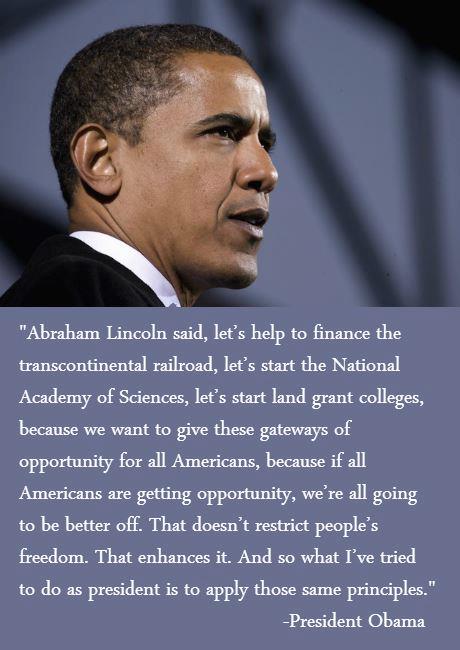
When we develop passionate views on an issue, we need to remember that it was compromise that got us to this point in history and not the views of just a few. When compromise failed, however, war broke out. And of all presidents in the history of the U.S., even Lincoln, it can be argued that this president understands what is at stake. For when the nation divided the last time, it was over whether some should be free and some should not. But as all our presidents soon learn upon entering office, guaranteeing liberty is not always simple.

So be careful with your ideological wall building and chasm digging, for  history will judge whether your effort moved us forward or ripped us apart. If we allow the defense of our ideological views to destroy the very thing we say we want to preserve, then all our talk of posterity will be for naught.  What will be left for our children will be but a shadow of what we say we defend.Even now, our most precious resources are learning discord rather than compromise as they watch us disintegrate into a split nation and not a united one. So even if we survive this election battleground, what legacy are we leaving our children?  What will they remember and learn from our actions and opinions? This is what I ponder…

He is the President of the United States of America and the lack of respect he has been shown for his willingness to serve the people has been appalling and divisive.
History will not just judge him, but will also judge the people he has served.