The Winter Season is not “owned” by just one group and respect for others is a good thing. Among other things, Christmas is about sharing, including sharing the season.


The Winter Season is not “owned” by just one group and respect for others is a good thing. Among other things, Christmas is about sharing, including sharing the season.
So many things for which I am grateful, one e-card was just not enough, so I made a gallery.
It is a good and noble thing to stand up for that in which you believe. Sometimes you may even need to fight for your beliefs, but remember when we choose to fight, we are seeking to change the will of others. Changing someone else’s will is not simply changing their mind, but changing their desire to resist the result you propose.
The decision to fight, to try to change someone’s will, should not be decided upon lightly. Even a fight of words can result in harm and injury. Before you start a fight, make sure your fight is for something in which you are willing inflict injury to achieve. Be sure the thing you are willing to injure others over has a great enough value that it will offset the damage you will cause.
We can stand on principles without resorting to a fight, but to do so we much have respect for the principles upon which others stand. In almost all cases, it will be better to stand than to fight. It is a profound task to figure out the exceptions.
Why do we write in blogs, journals, or memoirs? Is it because we like to see our ideas take shape, or think our messages are profound or revolutionary? Or do we simply write with the hope that they will have value today or tomorrow, have value to or for someone we will probably never meet?
A few weeks ago, a professor asked the question of why should we study history, but the real question, for me at least, is why do we write history? Why do we write our own history in our blogs, journals, and memoirs, a written record of our thoughts and actions? I think we write for three reasons. The first, we hope we are interesting and hope our activities will be of interest to others. The second, we hope that by writing our experiences down, we will learn lessons from our experiences and maybe others will learn from us as well. Third, we do not want to forget our experiences or be forgotten.
These are all valid reasons to write, but a great man taught me one other reason to write. He taught me that we can serve others through our writing, through our research, and through our records. Not just through the lessons or experiences we share, but through the lives of others we preserve through written record.
This great man, great to me at least, passed away two days ago. He had dedicated his retired years to gathering and recording history; specifically the history of his ancestors. Through his work, volumes of information became available to his relatives and to the public. He was never famous and never sought fame, but in certain circles, he was well known and well loved. Most of the histories he wrote were the histories of others, but upon his family’s request he wrote of his own youth and of his experiences as a World War Two POW. When he wrote of his journey in life, it was not to gain fame or attention, but simply to leave a record; a humble record of a man who spent his life serving. Through his life, he served his family, his faith, and his nation.
He set the bar high for those of us who follow, but in doing so he taught us the value of service and the blessings that service brings to our fellow man, to our family, and to ourselves. For in blessing others, he was truly blessed; in loving others he was loved in return.
So why do I write, simply put, to emulate in my own way a great man – I write with an attempt to serve others.

A Great-Uncle and a Great Man!
Integrity is not simply standing up against the actions of others.
Integrity is STANDING TALL and BEING YOURSELF despite
the attitudes and the actions of others.

 I went to bed last night thinking how sad it is the way people go about fitting in with a crowd, often putting down others to do so. Popularity is a mighty strong enticement for our youth. We try to teach them to ‘be themselves’ and not copy the behavior of others.
As adults, do we follow the same advice? In our attempts to gain the favor of one group, do we feel we must offend someone else?
As youth, our influence on others is often limited, either by locale or by relative anonymity, but our adult influence is often greater than we realize.
It is probably safe to say that we all slip-up time to time by putting down others in order to fit in with a crowd, but do we take the time to rectify our actions? When we get caught, do we apologize? Do we do the very thing we ask our children to do? Or do we feel we are justified in our speech or actions more than our children are?
During an election, much will be said that will irritate others. Much will be said for the shear campaign value of it. This is, and has been, part of our political culture, but is there a line we cross when we move from putting down our opponent and instead put down our opponent’s followers, the very people we want to represent?
While Mitt Romney is the latest to be called out for this, by no means is he the first to attempt gaining favor of a smaller group of citizens by insulting a larger group. Giving him the benefit of the doubt, I am going to conclude that if one of his children or grandchildren acted in a similar manner, he would require them to make amends. This is probably the greatest reason for my sadness today. For as a fellow Christian, especially as a fellow Mormon, and certainly as a fellow citizen, I recognize most of us make mistakes such as Romney’s, and most of us struggle to make amends.
The expectation of doing what is right should be an equal expectation placed on all of us, but sometimes I wonder if it is of greater importance for those with a greater audience to hold a higher standard of themselves than they might expect of others. Making mistakes is part of human nature, but amending one’s mistakes is somewhat divine. It shows greater character and a greater humility. It should not be seen as a weakness, while often it is labeled as such by detractors. But these same detractors are the ones who would require we gain their favor by insulting and offending in the first place.
So I went to bed last night feeling sad, but this morning I woke up with a song running through my head, a song that says, “I need a hero!” Maybe instead of counting the number of mistakes a person makes in their life, we should spend more time evaluating their reaction once they have made a mistake. For a hero is not a perfect person, but is rather a humble person willing to serve others and who attempts to make amends for their mistakes. For while they may often seem to fall short of our standards, they should never fall short of their standards without making amends.
Other YouTube versions of Holding Out For A Hero:
Tribute for Peace (this one chokes me up, but it is a must see)
If anyone can find a link to the Paramount VHS promo, the romantic one not the violent one, could you please share it with me.
In a politically heated world, it is easy to forget that it is not whether you win or lose but how you play the game.
When we focus too much on a goal of winning, we may falter in our understanding of what we perceive we are up against. It becomes too easy to for us to let emotion sway our reason, sway our perception of truth. In the end whether we win or whether we lose, we still must be able to move forward.
When we become polarized in our ideas of right and wrong, ferocious in our belief that the other side is not only the opponent, but desires the destruction of all we hold dear; when this happens we run the risk of our own ruin. For no matter the outcome of the election, the world will no longer meet the standards we have set, no politician will ever make us happy, and no law will satisfy our thirst for a sense of perfection. Politicians will promise, platforms will declare, but in the end disappointment will be our companion if we do not learn that the political apparatus cannot supply a sense of wellbeing. Only we can supply that feeling, that sense of prosperity, that sense of safety.
When we vote in an election, especially when the election is close, we must focus on the value of the process and not simply on the outcome we desire. This will ensure that win or lose, we will feel good about ourselves, our efforts, and our opponents, once the game is over.
Before joining a revolution, make sure you know the intent and the cause.
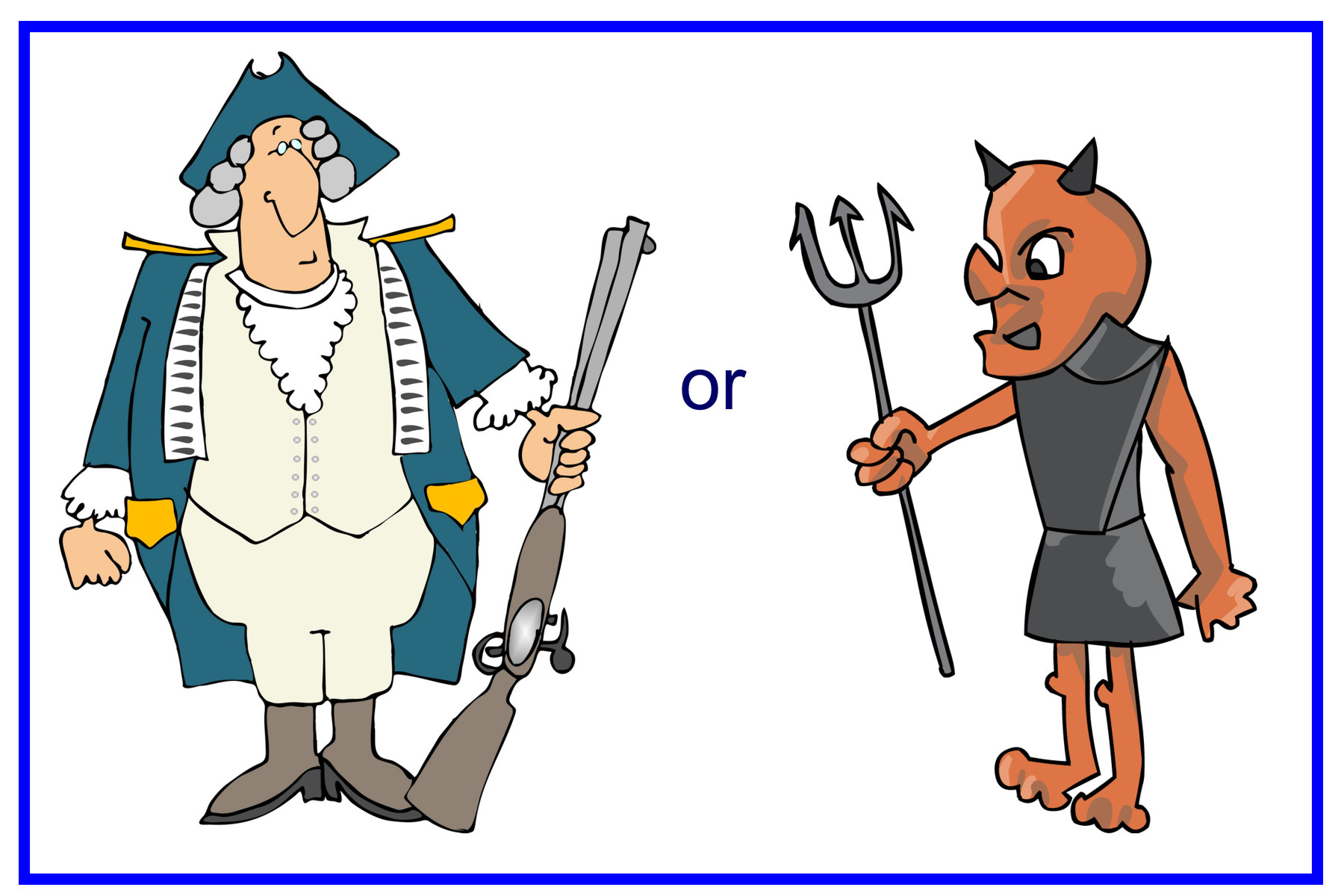
There is a difference between a revolution and a pitch-fork wielding, assimilated riot. One is based on seeking a better world through freedoms and diversity of thought. One is based on holding back freedoms and diversity; restricting thought.
Make sure your desire to protest, march and fight is based on a clear understanding of the objective, intent and goal. That you are not simply an assimilated, crowd following, pitch-fork wielding puppet of someone else’s plan to hold back diversity out of fearful ignorance.
Agency is the freedom to choose. It is unwise to choose assimilation over knowledge, and choice of thought. It is unwise to give your freedom up so that you may fit in with the crowd. For you never know when the mob will turn on you, and the riot will be in your backyard.
see also: Why Do We Go to War?, To Be Informed or To Be Educated,

Obstacles, physical and physiological, can’t always be planned for in advance. Sometimes it takes running, walking, and hobbling to make it to the finish line. The speed in which we finish the race is never as important as the obstacles we tackle on the journey. If we overcome the obstacles, we have success. If we have enjoyed the journey, we have won.
I think I need a vacation from the foolish remarks, ignorant attitudes, and rude comments of others. Does anyone know of a good rock to hide under?
 Pithy Ponderings