A Peaceful Thanksgiving Day

Embracing something new this year for Thanksgiving. Guilt free, stress free time with my husband.

When we were first married, the holidays were very stressful. Then the kids came and matters became much worse. Fibromyalgia undermined the holidays, especially Thanksgiving in those years when the kids were small and we did not know what caused my intense bouts of pain and fatigue. We did, however, know that participating in a game of holiday grandparent tug-of-war made me ill.

Eventually, the holidays became a time where my small family chose to stay home. Our door was always open, to family and friends alike. I would bake and cook and fill the table until it groaned. A few times friends joined us at that table, but most often it was just our small family of four.

After a very tough year of loss and a year when diagnosis finally explained my ill health, I asked my son to take over the Thanksgiving preparations. He was still a youth of twelve but he loved the challenge. From then on, Thanksgiving was his day.

Thanksgiving in my youth was all about the extended family and the food. Thanksgiving as a young wife and young mother was stressful. I tried my hardest counter the negativity of extended family contention. I learned that in a big family, the craziness is just part of the holiday tradition, but in a very small family, the craziness is unhealthy.

Year by year all our family shrank in size as age and illness took their toll. But with loss came the realization that the contention was gone as well.

We knew it would be awhile before our family would grow again. Knowing that the future would bring new members to our family caused us to ponder how to make the holidays different for the next generation.

These last few years found us carving out blissful memories as we carved the turkey. The holiday season became one of giving, of seeking others for whom we could share our bounty. Our table groaned less under the weight of food, but rather, gifts of food found their way to other tables.

Each holiday season, beginning with Thanksgiving, my children would focus on the gifts they could share with others outside our home. My son embraced the task of giving bread and jelly. My daughter crafted gifts of yarn and fabric. Baking and needlework filled our time and filled our hearts as our simple gifts brought smiles to others. The holidays were still stressful and fatigue was still a problem for me, but now the stress revolved around helping my children learn the value of giving thanks by giving of themselves.

My kids are not in the position to come home this year. They are both embracing their chosen paths, and I am immensely grateful for the maturity in which they traverse this stage of life. I am also grateful that during the years of teaching them to give of themselves, I have learned to share them with others.

As I reflect on the holidays of the past, I embrace the notion that for a time, maybe just a short time, my husband and I can enjoy Thanksgiving Day as a couple, not so young, but without any guilt or pressure. What to some might seem sad, the two of us alone on Thanksgiving Day, is the very thing for which I am most grateful this year.

I am filled with joy knowing that this year the gift I have given to others is my children and that my children can enjoy this time unfettered by guilt, sorrow, jealousy, and contention, at least not from me.

I am also filled with peace on this Thanksgiving Day; a peace emanating from the presence of good company, a bountiful pantry, and love.

. . . . . . . . . . . . . . . . . .

. . . . . . . . . . . . .

. . . . . . . .

FYI: I cannot view, nor do I endorse any of the ads that are shown on my blog.
Spinning: A Lesson in Quality not Quantity

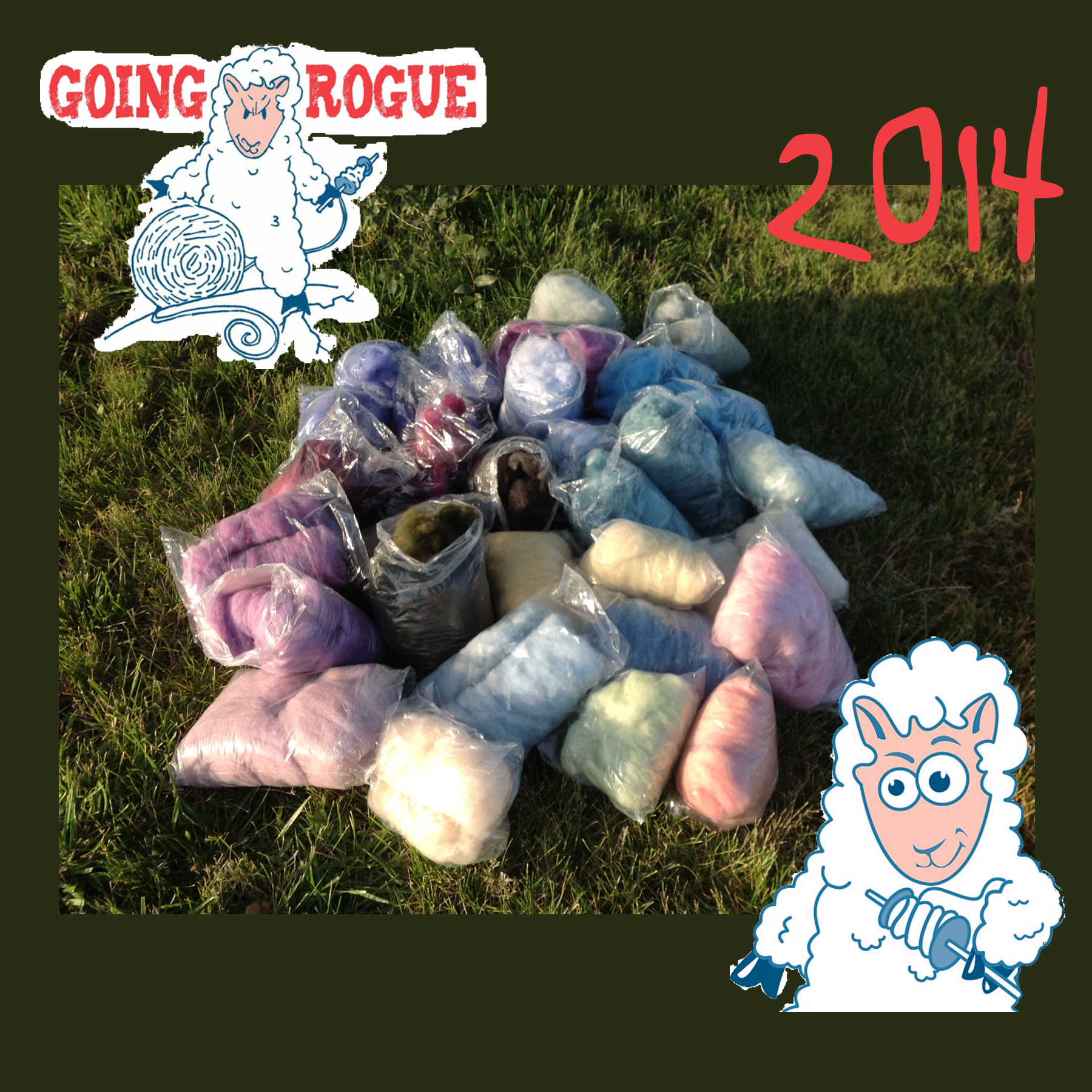
I decided to participate in Spinzilla 2014. When I signed up I thought it would be a week full of fiber, documentaries, and miles of yarn produced by my fingers and the power of my feet. I set a lofty goal of competing against last years ‘most yarn spun’ winner; a goal that was manageable if I remained dedicated to the task.

I envisioned hours of listening to my TV enlighten me about historical people and events while I spun brightly colored clouds of wool into sleek strands of yarn. The only thing that would prevent me from making miles of wool yarn was my own battle with fatigue. I was enticed by the thought of competing to win, something I seldom allowed myself to do physically since the fibromyalgia made itself known. I knew this would be a challenge – my challenge. Years ago I held notions of competing to win, but running was the center of that dream. Life, some good and some bad, interfered with pursuing such notions. I learned to enjoy the ride, not the speed in which I made the journey.

Spinning wool into yarn has been my therapy, and my joy. My feet no longer travel miles of asphalt, but they do propel me through miles of yarn. Whereas other exercises exhaust me after minutes, spinning can go on for hours without creating the fibro fatigue or fog so common with exercise. When I push it, I do get stiff, but it is a stiffness from activity and not from the fibromyalgia. This in itself is a blessing.

The week of Spinzilla began not as I expected, rather as unexpected as I could have imagined. A family emergency cost me most of the first day. Unexpected company, delightful company but unexpected, took up most of the third day, and fatigue coupled with a personal commitment dominated the fifth day. It was on that day that I finally decided that quality time with friends and family was more important than the miles of yarn I could produce. It was not a great epiphany, not earthshattering or new, but a simple quiet reminder that more fun could be had by enjoying the ride than in competing for a prize. With this renewed commitment to quality in life, I decided to join a group of spinners at the Denver Art Museum (DAM) for a massive spin-in demonstration on the seventh and final day of Spinzilla.

Typically I avoid crowds, particularly crowds where socialization is expected. Challenging myself to spin miles of yarn is easy compared to the challenge of overcoming a deep feeling of social fear and awkwardness, a fear which has increased rather than decreased with age and accomplishment. My husband, a.k.a. my spinning pit crew for an event that will require the transport of a wheel and other assorted supplies, encouraged me to embark on this challenge. Not much of a social butterfly himself but not from anxiety, rather by choice, my husband gently persuaded me to try something new; something I longed to do but from which I held myself back. He reminded me that my college’s moto, and something I try to live by, is Vita Abundantior, life more abundant.

There is little I can do to adjust the quantity of life which I get to live, but there are endless ways in which I can increase the quality of that time. All I have to do is make an effort and embrace the opportunities presented on my journey. The drive time and Spinzilla at the DAM will not aid me in the accumulation of yarn miles, but it will add quality to my life, and despite my anxieties I suspect I will have loads of fun.

Spinzilla 2014


. . . . . . . . . . . . . . . . . .

. . . . . . . . . . . . .

. . . . . . . .

FYI: I cannot view, nor do I endorse any of the ads that are shown on my blog.

Signs of Winter

A blast of winter air blew in this week and ignited in me a strong desire to change the background music that plays constantly in my home so as to drown out the ceaseless wind found in Eastern Colorado. It is October, and although Christmas decorations nestle alongside the ornamentations of Halloween, it doesn’t feel right to begin playing Christmas music so soon. Truthfully, I must confess, in years past I have succumbed to the temptation of playing Christmas music once the first icy winds blow in from the north. Yet this year, I hesitated.

Colorado is known for its perpetual sunshine more than for a distinct changing of seasons. Only in the worst of weather patterns does the sun stay hidden for more than just a day, but unlike in more temperate areas, the earth does not stay green. Certainly there is a beauty in the changing Colorado seasons, of this there is no doubt. Yet, too often the lack of summer rain has turned the earth yellow and the beautiful colors of Autumn are found only in the distant mountains.

In Colorado, it is not uncommon for the first snow to arrive in October. In fact in October 1997 a snowstorm blanketed the Eastern Plains under two feet of snow. Most years, however, the icy north winds only bring threats of snow rather than the fluffy white flakes. Without the prospect of a blanket of snow, the cold, biting wind can overshadow nature’s beauty. When the cold descends, and the sky turns grey, but no snow is in sight, Christmas music can brighten one’s day.

When the kids were at still home rather than in places where Autumn is filled with glorious, rich hues, Christmas music was a magical way to lighten the mood which often arrived with the grey skies and biting winds. Now that the kids are gone and it is just three aging felines and me prowling the house during the daylight hours, the thought of Christmas carols seems a bit overwhelming. Yet, the longing for the simple, timeless melodies of winter music remains. Fortunately over the years I have acquired hours upon hours of holiday inspired instrumental music. No Frosty the Snowman or Jingle Bells, but rather traditional melodies that make one think of hardy souls on windswept plains in far off distant lands or in days gone by.

A morning spent changing the bed linens, adding wool to the cats’ beds, and making a new music playlist has been a morning well spent. The first signs of winter have arrived and I am now ready to embrace the change.

. . . . . . . . . . . . . . . . . .

. . . . . . . . . . . . .

. . . . . . . .

FYI: I cannot view, nor do I endorse any of the ads that are shown on my blog.

Roller Coasters Rather Than Rockets

Well-balanced young people, especially those who are venturing into the world of adulthood away from home, tend to ride roller coasters rather than rockets. While this is extremely stressful, for them and for their families, it is actually a much better mode of transportation than rockets. Sometimes it may feel like the roller coaster simply goes in an unending loop, but unlike the rocket, the roller coaster remains on a sure track. Rockets on the other hand shoot off into space and seldom land gently back to earth. The chance of crashing or burning up on reentry is much greater than the chance of roller coaster derailment.

As a parent who chose to homeschool her children, I have faced more opposition than support in my decision. With the public or private school options there is no guarantee that the children will succeed, but there is a greater notion that utter failure will be less the parents fault than the systems fault. With homeschooling, from day one, there is the fear (more often the public’s not the parent’s) that the children will be socially inept, and the blame will rest solely on the parents. Homeschooling takes years and therefore the parents live with this worry for a long time; a worry that accompanies the worry that all parents share, the worry of a child rocketing wildly through life only to crash and burn on landing.

My kids are now off on roller coasters of their own choosing. Some days are filled with thrill and excitement, other days make them queasy. Failure and success now rest on their shoulders and their choices. They have already recognized that mom taught them well, and they know that they must now build on the foundations learned at home. Their roller coasters of life take them up and down on an undulating path, sometimes fairly extreme in its course. Over time, their course may smooth out and be less extreme, but maybe it won’t. Only time will tell. In either case as long as they do not derail, they will not crash and burn.

As for me, I am finding the job of mom different these days but strangely familiar. While the work is never done, the 24-7 routine is no more. I can’t track their every move, success, or failure. I can’t share every joy or pain. Sometimes this is a blessing and sometimes it doesn’t feel so much so. Yet, early this morning something dawned on me – I succeeded. I ran the race, did the time, and persevered to the end; not to the end of their roller coaster ride, only to the end of my homeschooling ride. The questions, well-meaning concerns, and downright rude comments from friends and strangers about socialization have stopped! Why? Because like any other human, my children must now blend or standout among the human mass of diversity we call society. The skills they learned outside the classroom, as they mingled with people of all ages, are helping them find their way. Amazingly, they are finding that they have less bad habits than their contemporaries, and I am not speaking of the bad habits like drugs, etc. I am speaking of the habits learned in the classroom: regurgitating rather than thinking, seeking the grade rather than the knowledge, and working the system rather than the task. Added to these habits are the learned anxieties that come from a system that puts monetary and popular success above the health of one’s body and mind.

Today as I write, my children are riding their roller coasters, and while I still stress over their journeys, they have shared with me their gratitude for the lessons I taught them. Lessons which have helped them stay in the tracks rather than derail. Certainly, they have long lives to live and there are no guarantees, but it is a comfort to know that my journey as a homeschooling mom, with all its bumps and bends, was a successful roller coaster ride. I did not derail, crash, or burn.


. . . . . . . . . . . . . . . . . .

. . . . . . . . . . . . .

. . . . . . . .

FYI: I cannot view, nor do I endorse any of the ads that are shown on my blog.

Myth Rather Than History, Fiction Rather Than Fact

Twenty-five years ago the Berlin Wall, a dramatic symbol of the Cold War, was breached and then torn down. Yet, even after a quarter century, evidence of the Cold War culture permeates daily life. Regardless of policy decisions in Washington or the ongoing debate among scholars as to whether the Cold War ended or an new Cold War is beginning, evidence that many people long for the clear-cut, black-and-white days of the Cold War is easily found; days when media and governmental propaganda directed the public to the larger imperial struggle rather than at the ground level crises the Cold War policies perpetuated.

Crisis and war abound today with coverage of human tragedy and violent conflict filling the media streams, but intervention by Russia is viewed as being bad and intervention by the United States is viewed as necessary, even if some acknowledge it as a ‘necessary evil’.  Cries for humanitarian assistance from those who are suffering, at times, are obscured by political tirades calling for retaliation and the placement of blame.

When World War I, The War to End all Wars, ended and the call for greater international cooperation went forth among the nations, politics stood in the way. When, after another great war, a second US president called for cooperation, the United Nations was formed. Yet, once again political rivalry and imperial competition undermined international cooperation. Under the cloud of Cold War animosity, it became evident that the United Nations could not prevent violence or war. However, despite such animosity, the United Nations became a vehicle for humanitarian cooperation. As the twentieth century wound down, there was hope that human suffering could be effectively addressed internationally even if it could not be eradicated.

The dawn of a new century violently reminded the world that there were many who preferred violence over peace. Sadly, the lessons of the twentieth century were not headed as fully as they should have been.

Isolation from the world was not the answer, nor is it ever an effective answer. No nation can become a hermit in this modern world without causing internal suffering. Military and humanitarian intervention into the crisis ridden regions of the world is a price great nations pay for the economic gains such regions provide. During the nineteenth and twentieth century, the United States expanded its trade and its influence worldwide. Time, and time again, the United States touted its right to intervene, first in the Americas and later throughout the globe. It was not the only nation to do so. The great nations of the twentieth century all benefited from the colonial and neocolonial policies that provided wealth to their citizens. The competition for resources led to war and certainly contributed to the Cold War game of Risk that dominated half a century. This competition also led to some of the turmoil of today, and is being used as justification for many of the atrocious acts of violence being perpetuated by radical power hungry groups. Yet, rather than working in cooperation to combat the human suffering that increases daily, the great nations seem to have splintered, at least if one reads the propaganda filled media accounts which focus on sensationalism rather than facts.

Has the world become more violent and less compassionate than at any other time in human history? Or is there simply greater means for news of the violence to be shared?

These questions cause me to ponder and reflect on the state of humanity and the crisis of mankind, but there is a bigger question that keeps tumbling around my head and disturbs me on a deeper level. Why would someone wish to sensationalize or embellish the already horrific levels of violence occurring in turbulent areas of the world? It is easy to understand those who wish to ignore the horrors man inflicts upon man, to deny the reality that man can be the most uncivilized of the creature of the earth. Those who hide from the ugly of mankind seek isolation and are naïve enough believe that closing their eyes in the face of danger will make the danger disappear. It is easy to understand their reasoning and their motivation, but the motivation of those who wish to make the horror worse than the evidence supports is much more difficult to pinpoint.

Do they seek to demonize the enemy? During World War II, the strategy of demonizing the enemy was key to gaining support for war. When the war was over, the hatred for the enemy was to magically disappear and the demon to become a friend. The same strategy was used throughout the Cold War. This strategy of demonization worked well for governments (even if the magic of friendship failed) and now seems to be adopted by non-governmental organizations (not necessarily a new tendency) with far reaching consequence including creating a huge volume of untrustworthy ‘news reports’ which make evaluation of world events difficult at best.

If demonization of others is the motivation, then what is goal? Certainly the issue of the worldwide violence and growing humanitarian crises is of great concern, but of greater concern is the growing push for more violence – retaliatory violence. When governments are behind the call to war, there is need for level headed evaluation and hopefully international cooperation. When the call to war comes from sources unknown or sources with questionable motives, the need for level headed evaluation and hopefully international cooperation is much greater.

Sadly, such cooperation seems to be of little value in a world which is seeking a hero, a world in which myth has replaced history and fiction replaced fact.


. . . . . . . . . . . . . . . . . .

. . . . . . . . . . . . .

 . . . . . . . .

FYI: I cannot view, nor do I endorse any of the ads that are shown on my blog.

The Sadness of Finding Fault

We all do it at one time or another, finding fault. In the process of evaluation, it is vital that both positive and negative attributes are noted and examined. Yet, even when the evaluation presents a finding of greater negative than positive, it is up to the individual to choose how to process the findings.

When buying an object, say like a car or a sofa, it is clear that the positives must outweigh the negatives. However, since very little in life is perfectly positive, we do well when we focus our thoughts to the positive attributes of the imperfect.

Sadly, it is often the case that when evaluating people, whether it be an individual or a group, we focus on the negative aspects more than the positive, even when the positive attributes outweigh the negative. Worse yet, we seek to blame others for the things that make us sad, angry, or depressed. True, the actions of others can adversely affect our emotional and physical state of being, but in the end we seem to choose to find fault with others more consistently than we try to find happiness in ourselves. When we focus on fault finding and neglect to nurture a spirit of compassion, we become the originator of a greater sadness than that which may have come from the actions of others. For while we can separate ourselves from others, we cannot walk away from our self.


. . . . . . . . . . . . . . . . . .

. . . . . . . . . . . . .

 . . . . . . . .

FYI: I cannot view, nor do I endorse any of the ads that are shown on my blog.

Stop Condescending the Youth

Stop Condescending the Youth – my thought on banning books. Inspired by John Green, after reading one of his recent tumblr posts and watching a 2008 volg.

Parents should have a voice in their student’s education, and balanced curriculum is vital, but at the heart of any book banning discussion seems to be the perceived notion that the youth cannot handle the material. Is it any wonder that so many 18-20 year-olds make terrible choices once they leave the confines of parental oversight?

I would rather have my youth confront life while still at home than to have them face it for the first time when they are on their own. This philosophy has not made parenting easy, but I didn’t sign up for easy.

I grew up in a very conservative community where one very conservative religious group dominated the society and the politics. Yet, I still read books considered controversial, some that have been on banned lists elsewhere. The best classroom discussions came from these books and prepared me for the great human stories I went on to read in college. More importantly, these books have aided me throughout my years as a mother.

So my take on controversial reading material – Parents READ the books, and then DISCUSS them with your teen before they discuss them in class. The shock you will receive from the book is nothing compared to what your kid already faces or will face in school, particularly in college even if they attend a very conservative/religious college.

The material that seems to be at the heart of this latest controversy pales in comparison with what my son encountered while taking classes at a nearby school. It was not material addressed in class but was the conversations and actions outside of class, and it shocked the administration when my son finally reported the language and behaviors he encountered in non-classroom activities. As a parent, I assure you, I would have been much happier if my middle-school child would have had exposure due to “book discussion” rather than exposure due to normal youth behavior. Normal had changed since I was in school and since the administrators had been in school. We were all shocked, dismayed, and deeply troubled by what we learned.

Discussion of the issues and norms needs to be part of a youth’s education. Maybe if the older students had been more aware, more educated, then they could have acted where adults could not have. We need to stop condescending our youth and instead empower them with knowledge gained from discussing hard, controversial topics.

Since I am personally acquainted with the people behind the latest petition to remove books from school curriculum, I would ask that anyone reading this avoid emailing the people directly, but instead only contact the school district in question with comments. While my readership is small, only a minuscule fleck of dust compared to John Green’s, I would not wish to cause issue for the people involved. Comments of criticism and/or comments of support should ONLY be sent to the district. Edit – it appears John Green removed the link to the petitioners. Good.


. . . . . . . . . . . . . . . . . .

. . . . . . . . . . . . .

 . . . . . . . .

FYI: I cannot view, nor do I endorse any of the ads that are shown on my blog.


Outward Expression of Who You Are

I teach a simple statement to both my son and my daughter, “Your clothing is an outward expression of who you are.” This statement hinges on a very important factor – knowing who you are.

I recently taught my son’s youth class about how in everything we do, we are communicating something. Knowing what we communicate and how we communicate it is very important. I made the simple demonstration of putting on and taking off an oversized, black cardigan. The class was amazed at the transformation one garment could make in my appearance. I then proceeded to have the tallest, coolest boy in the class stand next to me. I asked him to read a passage and then I read the same passage. Then I asked the class what were differences about the two of us. This time the class was intrigued. Youth vs. age, male vs. female, pitch of voice, and the list went on; each of these things can affect the way people see and hear us.

How we dress, how we move, how we interact – great tools of communicating who we are and what we believe – BUT first we must learn to know ourselves. This is what I wish more parents and leaders would focus on rather than simply listing what today is considered modest or popular. Teach the endless possibility of Dos rather than always the specific Don’ts. Certainly providing boundaries and guidance is important, but more important is providing guidance on how to become the wonderful individual that each of us is. This guidance must include teaching our youth how to dress in a way that is an outward expression of who they are because then we are helping them develop of the courage they will need to be that person in the world.

In my experience, it takes much more effort to provide a creative, personal wardrobe than it does to provide either a modest or popular wardrobe. It does not necessarily take more money, but it certainly takes more time and sometimes more skill. It also takes a really strong parent/child relationship because it must be a team effort or it will not work. I have had a wonderful time working with both my children and will miss this part of parenting and homeschooling. In reflection, I believe I have learned as much as my children have, and that is truly a great blessing.

. . . . . . . . . . . . . . . . . .

. . . . . . . . . . . . .

 . . . . . . . .

FYI: I cannot view, nor do I endorse any of the ads that are shown on my blog.

History of Intervention

Over the past few months, I have been studying the history of intervention as part of my pursuit of a Master’s in Military and Diplomatic History. There seems to be two common lessons to learn from the history of military intervention.

First:

There is no “getting it right.” Military intervention forcibly halts conflict for a time but does not end conflict. It always comes back. Inaction will cause many to suffer. Action will cause many to suffer. Therefore, do we intervene and cause suffering in order to stop suffering, all the while simply postponing war for the next generation? Or do we let war run its course and watch a generation die?

Second:

Stopping regional war but risking international world war is not usually worth the price. Unfortunately, no one can figure out when the price is worth paying. When 100,000 die? When multiple nations topple? When the threat reaches your own back door?


There is one new lesson being recorded for our posterity even as I post this.

Those who call for war are seldom the ones who fight the war. This is nothing new, but it is being documented in great volume in the news and social media. Armchair warriors cry for a strong stand against tyranny and call it weakness when diplomacy is used. They approve of the jobs created by military buildup but disapprove of paying the bill. They think war is like a game of Risk, a game that when an impasse is reached you box it up and put it on the shelf for the next time you feel like prancing around like a peacock. Being strong means looking strong rather than acting strong.

What we should be learning.

The one thing that history doesn’t seem to teach anymore is the value of stepping back from a fight and trying for peace once again. When this choice is made, if it is made, it is belittled and viewed as a weakness. It, rather than warmongering, is called the cause of future conflict.

President Teddy Roosevelt said “Speak softly and carry a big stick…” But we do not speak softly any more.

Machiavelli advised to be respected rather than loved. He used the word “feared” but his context inferred respected because the Prince should avoid being hated.

The person who always carries a big stick will eventually be hated – hated for acting, hated for not acting, and hated for the threat of the big stick. Sadly, this is the lesson history is trying to teach but a lesson we just don’t seem to be learning.